Uncategorized
Wow! This topic hooked me the second I started tinkering with mempools and gas strategies. My instinct said: somethin’ about the way transactions re-order didn’t sit right. At first it felt like an unsolvable game — bidders, bots, and invisible players scooping value while regular users paid the bill. Initially I thought MEV was just a market nuisance, but then realized it’s a fundamental design pressure in public blockchains that you can’t ignore. Okay, so check this out—there are practical patterns you can use today to protect your portfolio and to simulate trades with high confidence.
Seriously? Yes. MEV (maximal extractable value) isn’t just about sandwich attacks anymore. It’s a whole ecosystem that touches liquidation bots, oracle manipulations, and gas auction dynamics. Hmm… there’s a lot of folklore here, and that lore sometimes confuses newcomers. On one hand, some defenses are hype; on the other, some tools actually change outcomes when you trade. I’m biased, but I’ve been running simulated trades against live mempools for months. The difference between simulated outcomes and on‑chain reality was often startling.
Whoa! Small anecdote: I tried a leveraged swap the other week and my simulation predicted a 0.8% slippage. Live? I lost 2.4% to frontrunning and an aggressive gas race. My gut said the sim missed something. Actually, wait—let me rephrase that: my simulation was fine for slippage, but it didn’t account for priority-gas auctions and front-run insertion. On the bright side, that failure pushed me to adopt tooling that models mempool behavior and MEV-aware ordering. This part bugs me — because most wallets still gloss over it, even though it matters more as positions grow.
Why transaction simulation matters (and why most sims lie)
Simulating a trade is not optional if you’re doing DeFi seriously. Short sentence. Many wallets give you a pre‑trade quote and a naive gas estimate. They stop there. That approach breaks down when bots can re-order or insert transactions. Longer thought: when the mempool is full and you face aggressive searchers, the sequence of events leading to your execution can change — front-run, back-run, insertions around oracles — and the end price you get is a function of that entire sequence, not just the on-chain state at the time you signed.
Here’s the thing. Simulations that ignore mempool state will usually understate risk. Medium sentence. Simulations that account for off-chain actors and price impact are better. Longer sentence: if your wallet can replay the mempool, test your signed transaction under likely attacker behaviors, and estimate the probability of being front-run, you get a far more realistic sense of expected slippage and cost. This is exactly where advanced wallets shine, because they can do transaction simulation plus MEV analysis in one flow.
I’m not 100% sure about every attack vector. There are edge cases that even searchers miss. But the broad classes are consistent: sandwich attacks, insertion (place a trade before you that skews price), reorg-based extractors, and oracle manipulations. Each has its own signature in the mempool and in the way transactions are packaged by block builders. So if your tooling can observe mempool dynamics and simulate multiple block-building scenarios, you’re ahead of most traders.
MEV protection tactics that actually move the needle
Short sentence. Use private relay submission when it’s available. Many people still post to public mempools by default and that is basically a neon sign for bots. Medium sentence. A good private submission path reduces observable surface area for searchers, and when combined with a simulated estimate of what a block builder might do, you can pick a higher-probability execution path. Longer sentence with detail: block builders and searchers often cooperate, and so removing your transaction from public view — while not perfect — reduces simple sandwich windows and gives you a measurable edge.
Okay here’s another tactic: set better gas strategies. Wow! Gas isn’t just about speed; it’s about insertion likelihood relative to competing bids. Medium sentence. Use gas ceilings and price bands that are informed by simulation data, not by last-minute panic. Longer sentence: if your wallet can recommend a gas price that balances execution speed with a lower chance of being picked off by bots that arbitrage tiny price differences, you’ll often pay less overall than the “max fee” panic mode many folks use.
Be pragmatic: break large trades into smaller ones if liquidity curves and fees still make sense. Short sentence. This isn’t always ideal, but sometimes a staged execution will avoid triggering aggressive searcher strategies that target large slippage events. Medium sentence. Also consider routing alternatives: a single big swap on one DEX might draw more extraction than a routed multi-DEX sequence that spreads impact. Longer sentence: simulation that includes DEX pool depths and potential path-based slippage gives you better routing choices than blind market orders, so choose tools that show those tradeoffs.
Portfolio tracking: beyond balances
Really? Yep. Portfolio tracking in DeFi should be transaction-aware. Short. If you only track balances and prices, you’re missing realized slippage and hidden costs. Medium. The right wallet ties together holdings, pending transactions, and simulated outcomes so you can see how a proposed action shifts your net exposure. Long: when a wallet surfaces both pre‑trade simulations and post‑trade real outcomes — including fees, MEV, and tax-relevant events — you start to manage portfolio risk like a pro rather than like someone guessing.
I’m biased, but I favor wallets that let you tag positions, track unrealized P&L across chains, and run hypothetical trades on historical data. Short sentence. It’s surprisingly useful. Medium sentence. If your tracking tool can replay market conditions and your own transaction sequence, you can spot strategies that look profitable in paper but fail once priority gas auctions and sandwich bots are considered. Longer thought: the feedback loop of simulate->execute->compare is fundamental to improving strategy over time, and the best wallets make that loop painless.
Transaction simulation: what to look for
Short. Good simulations offer deterministic outcomes for a given block-building scenario. Medium. They surface potential failure modes — slippage thresholds, failed swaps, and scenarios where a transaction reverts because the state changed between sign and inclusion. Longer: advanced sims will also give probabilistic outcomes by modeling adversarial actors in the mempool, showing you not just the best-case and worst-case, but the distribution of likely results under realistic adversary behavior.
Hmm… many people ask: how accurate are these sims? Short sentence. Not perfect, but far better than blind signing. Medium sentence. The quality depends on the simulator’s data source: a stale state gives you stale predictions, while a live mempool replay gives you actionable signals. Long sentence: if your wallet integrates with public relays, private relays, and even has options to submit via bundled transactions, then the simulation+submission flow becomes coherent and you reduce surprise outcomes.
I tested several workflows. Short. Some wallets simulated very well but offered no private submission. Medium. Others let you submit privately but gave you only a naive gas estimate. Medium. The one I kept coming back to balanced those features and added portfolio context. Longer sentence: having a wallet that ties transaction simulation, MEV risk scoring, and a clean portfolio interface — while giving you private submission paths — is the combination that actually reduces realized costs over months of trading.
Why the wallet UX matters
Short. UX matters more than geeks admit. Medium. If protection features are hidden behind 10 clicks, you’ll never use them under stress. Longer: the wallet should present a clear trade card that says: estimated slippage, MEV risk (low/medium/high), submission options (public/private), and recommended gas bands, so you can make confident decisions fast when markets move.
I’ll be honest, I like tools that speak plain English and make recommendations, not just cryptic logs. Short. I’m also picky about permissions and local signing. Medium. A wallet that centralizes simulation but forces remote signing is a no-go for me. Longer sentence: the sweet spot is a wallet that does heavy lifting locally where possible, but can optionally offload to trusted relays for private submission, giving you a balance of convenience and security.
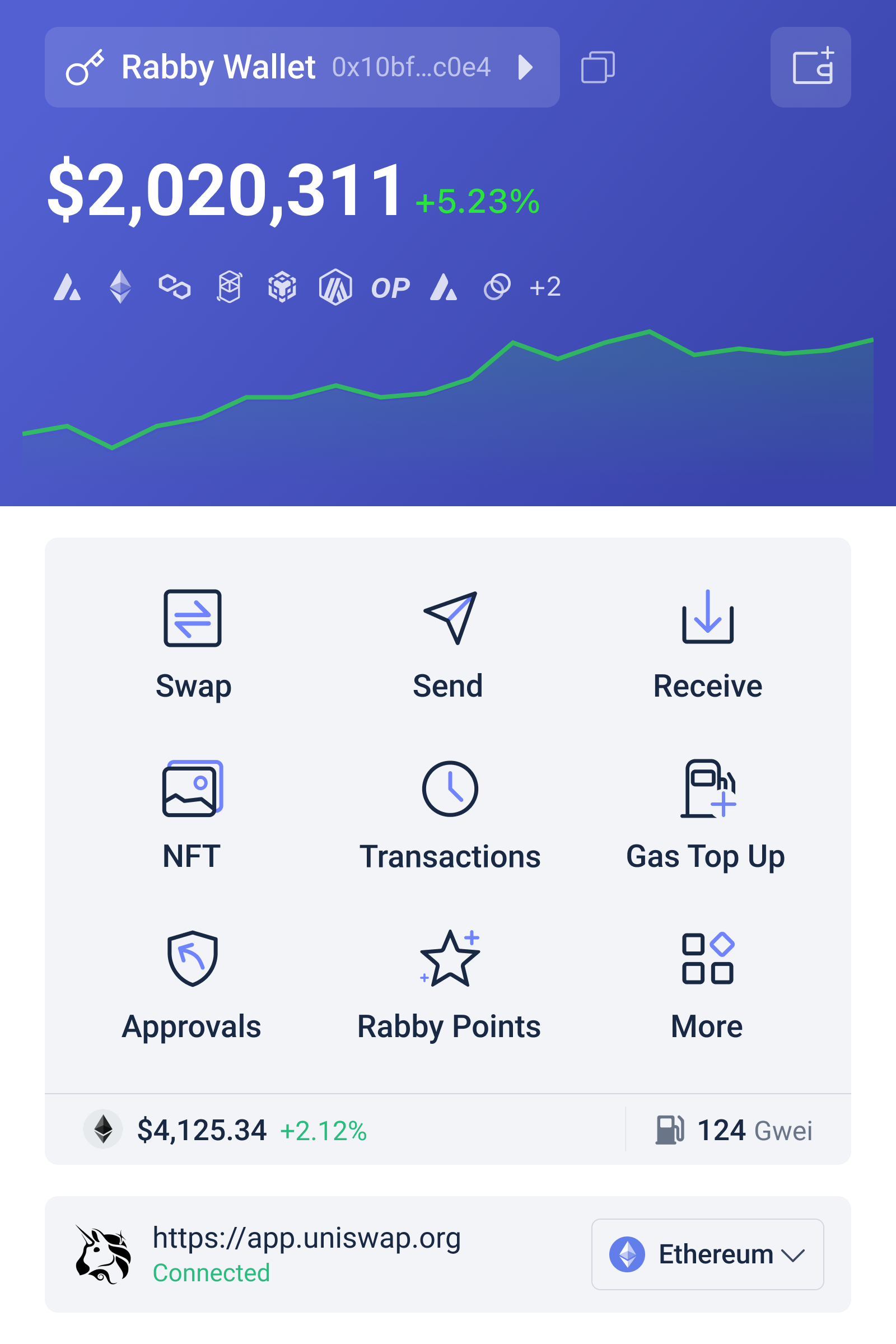
Check this out—if you want a pragmatic starting point, look at wallets that explicitly advertise MEV protection and transaction simulation as core features, rather than as afterthoughts. Short. They exist and they work. Medium. One such option integrates portfolio tracking, mempool simulation, and private submission flows into its interface. Longer: it’s called rabby wallet, and I’ve found its combination of sims, UX, and security features very useful for serious DeFi activity (oh, and by the way I use it for experiments, not as a holy grail).
FAQ
How much can MEV protection save me?
Short answer: it depends. Medium sentence. For small retail trades you might not notice much, but for larger positions or repeated strategies, savings compound. Longer sentence: many traders report reduced slippage and fewer failed trades after adopting private submission and MEV-aware simulations, which translates directly into better realized returns over time.
Are transaction simulations foolproof?
No. Short. Simulations are models, not guarantees. Medium. They reduce uncertainty and improve decision-making. Longer: be prepared for rare surprises, and always review outcomes so your model keeps improving — it’s an iterative craft, not a one-time fix.
Alright — wrapping up, but not closing the book. Short sentence. If you’re actively trading in DeFi, do this: use simulations that incorporate the mempool and adversarial behaviors, prefer wallets that let you submit privately, and track your outcomes so that simulations get better over time. Medium sentence. Over months, the cost saved from avoiding extractive MEV and dumb gas bids often outweighs the time spent learning the tools. Longer final thought: the market is messy and sometimes ruthless, though actually with the right setup you can reduce noise, protect liquidity, and trade more confidently — somethin’ I wish more traders did earlier.