Hargele Hamole

Hargele Hamole

Hargele Hamole

Hargele Hamole

September 2025
Home2025September
Uncategorized
September 28, 2025 By admin

Why Kalshi Changed How I Think About Event Contracts (and How to Get Started)

Whoa!

Kalshi feels different. It’s a regulated exchange that lists event contracts you can trade like futures, and that simple framing blew my mind when I first used it.

At a glance you buy a contract that pays $1 if an event happens, and $0 if it doesn’t — straightforward, right? The truth is messier, though, because regulation, settlement rules, liquidity, and user verification all change the experience in ways that matter to everyday traders.

My instinct said this would be a niche tool. Actually, wait—let me rephrase that: I thought it would be niche for markets people, but then I saw mainstream interest grow once the platform became more accessible.

Really?

Yes. Kalshi is noteworthy because it’s one of the few U.S.-regulated venues for event-based contracts, which means there’s a lot less legal fuzziness than you get in some other prediction setups.

On one hand regulation brings trust and consumer protections. On the other hand, it brings onboarding friction—KYC, funding limits, and sometimes slower market launches.

I’m biased, but I prefer the checks; they reduce weird counterparty risk and make these markets easier to recommend to friends who aren’t market pros.

Hmm…

Here’s a quick primer on how the core product works without getting too deep into the weeds.

Most Kalshi contracts are binary event contracts: think “Will X happen by Y date?” If yes, the contract settles at $1; if no, it settles at $0. Prices move between 0 and 1 and you can interpret a 0.72 price as the market’s consensus 72% chance — though that’s market-implied, not a guarantee.

Liquidity matters a lot here. Low-volume markets can have wide spreads, and that can make execution expensive, which is something that bugs me about smaller event lines.

Whoa!

Kalshi login and account setup are pretty standard but expect identity verification. You sign up with email, create a password, and verify your identity with KYC documents; sometimes there’s a short wait while they confirm things.

Two-factor authentication is supported, and you should enable it. Also, funding usually happens via ACH or linked bank transfers rather than crypto, because good ol’ fiat rails are how regulated exchanges operate in the U.S.

Something felt off about seeing a “verification pending” banner for the first time, but that pause is the tradeoff for regulated custody and clearer settlement rules…

Really?

Yes, settlement is one of the places regulation shows up cleanly. Each market specifies an objective outcome and a settlement source or methodology, which reduces ambiguity when the final price gets decided.

That means disputes are rarer, though you’re still tied to the contract definitions. Read them carefully—phrasing like “reported by X at Y time” can be decisive.

On a practical level, that clarity lets institutional participants enter markets with confidence, which in turn can improve liquidity for retail traders.

Whoa!

Fees, margin, and liquidity deserve their own quick note. Kalshi charges trading fees that vary by product and participant type, and leverage is limited compared to traditional futures.

Reduced leverage is purposeful; it lowers systemic risk while keeping markets accessible for straightforward directional bets. But — and here’s the human part — smaller position sizes can feel restricting when you’re used to highly leveraged platforms.

For many of us, the trade-off is worth it: fewer margin calls, lower surprise losses, and a cleaner counterparty relationship.

Whoa!

If you’re thinking about building markets or making a living trading event contracts, pay attention to market design. Creators set the event language, end-date, and settlement method, and those choices shape both trader interest and how the contract resolves.

Well-phrased outcomes lead to tighter markets because nobody’s guessing at what “occurs” means. Poorly-phrased outcomes invite disputes and volatile pricing, so be picky when you choose which events to trade.

And yeah, creating a market can be a path to earn fees or attract attention if you do it right. I’m not 100% sure it’s easy money though — it often isn’t.

Screenshot-style illustration of an event contract chart with price moving between 0 and 1

Where to learn more and get started

If you want to see the platform directly, check Kalshi’s official site: https://sites.google.com/cryptowalletextensionus.com/kalshi-official-site/ — that’s the most reliable place to view current markets, rules, and account requirements.

Start small. Trade a few low-risk contracts to learn the cadence. Watch settlement notes closely. Repeat and adjust.

Also: keep records for taxes. These trades are reportable events in the U.S., and you’ll want clear exportable trade history when April comes around.

FAQ

Do event contracts on Kalshi behave like bets?

Sort of. They function like binary derivatives tied to real-world outcomes, but because Kalshi is a regulated exchange you get clearer settlement rules and formal counterparty obligations compared with informal betting platforms.

How fast is the Kalshi login and verification?

It varies. Basic account creation is quick; identity verification can take minutes to days depending on document quality and volume. Enabling 2FA will add a small step each login but is worth the protection.

Are these markets risky?

Yes. Event markets can move quickly and sometimes unpredictably, and low liquidity can add slippage. Treat them like any speculative instrument: size positions to risk tolerance and don’t trade with money you need short-term.

READ MORE
Uncategorized
September 26, 2025 By admin

Why Omnichain Bridges Like Stargate Finance Matter — and Why You Should Be Cautious

Whoa! Cross-chain stuff moves fast. Seriously? Yeah — in less than a few years the crypto world went from “one chain to rule them all” vibes to this messy, exciting web of multiple chains that all kind of need to talk. Hmm… my first impression was that bridges are just plumbing. That held for a second. Then I started poking under the pipes and somethin’ felt off about the smell. My instinct said: pay attention to how liquidity flows, because that’s where the surprises live.

Okay, so check this out—omnichain bridges aim to make assets behave like local money across many chains without wrapping shenanigans that make users uncertain. Medium-sentence: Stargate Finance is one of the better-known attempts at that. Longer thought: built to offer instant settlement across chains by relying on unified liquidity pools per native asset and a reliable messaging layer, it tries to cut out the long waits and awkward token representations that plague many older bridges.

I’ll be honest: I’m biased toward solutions that favor liquidity efficiency and coherent UX. This part bugs me about bridges: too many routes mean too many failure modes. On one hand, a bridge that locks and mints wrapped tokens adds complexity; on the other hand, relying on pooled liquidity and guaranteed delivery trades some decentralization for speed and predictability. Initially I thought that was a hard compromise, but then realized there are trade-offs designers can tune instead of binary choices… actually, wait—let me rephrase that: trade-offs are inevitable, but the way they’re engineered matters a lot.

Diagram of omnichain liquidity pools and message relayers

What “omnichain” actually means — in plain words

Short: omnichain means the token acts like the same asset across many chains. Medium: rather than issuing separate wrapped tokens and hoping users understand the difference, an omnichain system attempts to preserve the canonical asset semantics across destinations. Longer, with nuance: that often requires a messaging layer that reliably tells the destination chain “hey, finalize this transfer” and a liquidity layer that can make that transfer instant by drawing from pre-positioned funds, avoiding slow mint/burn cycles.

Here’s how the common architecture feels when you use it. Short burst: Wow! You’ll notice faster finality. Medium: The sender pays the bridge, the protocol routes an instruction over a messaging network, and the destination chain receives liquidity from a pool, crediting the recipient. Long: because liquidity is pre-pooled, you avoid waiting for on-chain mint confirmations elsewhere; it behaves more like a bank transfer than a token IOU — provided the pools and the messaging layer remain honest and intact.

Why Stargate stands out (and where it doesn’t)

My quick read: Stargate was built to solve the exact UX pain I just described. Short: it focuses on native liquidity pools. Medium: that design lets users move actual native assets without multiple wrapped representations. Also, it pairs a messaging layer with liquidity to create near-instant omnichain transfers. Longer thought with nuance: those design choices reduce obvious UX friction, but they also concentrate risk into a few smart contracts and the pool operators, so while the transfers feel simple, they hide complex economic and security dependencies.

Something else: protocols like Stargate are relatively developer-friendly, which encourages integrations with lending markets and DEXes, enabling what we now call omnichain composability. That has huge upside — decentralized apps can span chains without building bespoke bridging code for every new chain. But again, the faster you move value, the more you have to trust the implementation.

Here’s a practical aside (oh, and by the way…): if you want to read their official overview, check this link for the team’s resources and docs: https://sites.google.com/cryptowalletextensionus.com/stargate-finance-official-site/. I’m not shilling any chain here; it’s just useful to look at specifics when evaluating risk.

Common risks — and how to think about them

Short: bridges get hacked. Medium: smart contract bugs, economic attacks on liquidity pools, oracle and messaging-layer failures, and sometimes governance mistakes or privileged keys are the culprits. Longer: beyond code bugs, the composability of omnichain apps means an exploiter can attack one protocol and cascade failures across multiple chains if systems are tightly coupled — that’s systemic risk, not just a single exploit.

One thought that keeps coming up: many users treat bridge transfers like bank wires — irreversible but trustworthy. That’s a dangerous assumption. The tech tries to make transfers feel instant, but if the protocol’s guarantees rely on a few operators or an off-chain message relayer, then “instant” can be brittle. Something else that bugs me: even well-audited code hasn’t prevented mistakes from being exploited in the past. So audits are necessary but never sufficient.

Practical mitigations: diversify the bridges you use, limit transfer sizes, prefer bridges with transparent multisig controls and public proofs of reserves, and watch for bug bounties and insurance backstops. I’m not giving financial advice — but risk-managed behavior is common sense in this space. I’m not 100% sure about every insurance model’s coverage, so read the policy fine print… I mean it.

UX and developer experience — why that matters

Short: good UX lowers mistakes. Medium: omnichain primitives reduce developer friction and make it easier to build multi-chain dApps. Longer: better DX doesn’t just help users; it also reduces the chance of integration errors that lead to funds being misrouted, misinterpreted, or exposed through subtle incompatibilities between chains.

One time I watched a dev team deploy a bridge integration that assumed the same gas patterns across chains. That was a mess. Lesson: even if the underlying bridge offers a unified API, chain-level differences still bite. So when a project integrates omnichain tooling, they need to do thorough, chain-specific testing.

How liquidity providers (LPs) fit into the picture

Short: LPs supply the pools that make instant transfers possible. Medium: they earn fees for facilitating cross-chain swaps but take on impermanent-risk profiles that differ from typical AMM LPs. Longer: because these pools might be the canonical liquidity for an asset’s omnichain functionality, a sudden large draw or exploit can deplete a pool and temporarily break transferability — meaning LPs are both enablers and potential chokepoints.

Something to note: reward programs and fee structures matter. If fees are too low, LPs leave and the system loses liquidity depth; if fees are too high, the transfer experience degrades and users seek alternatives. It’s a balancing act, and design details like dynamic fees or rebalancing incentives can make or break long-term sustainability.

FAQ

Q: Are omnichain bridges “safer” than wrapped-token bridges?

A: Not inherently. They trade certain risks for others. Omnichain designs remove wrapping complexity and user confusion, but they centralize liquidity and create concentrated contract exposure. Evaluate the protocol’s security, multisig design, audits, and economic assumptions before trusting it.

Q: How should a user minimize bridging risk?

A: Start small. Use established bridges, check recent audit and exploit history, split large transfers across time and providers, and monitor on-chain activity. If you rely on bridging for business-critical flows, consider insurance or custodial fail-safes and run your own tests on testnets first.

Q: Can omnichain composability change DeFi?

A: Yes. By enabling protocols to span chains with fewer engineering headaches, composability can unleash new product types: omnichain lending markets, cross-chain yield aggregation, and instant liquidity routing. But with that power comes systemic risk — more eyeballs, more attack surface. Trade-offs again.

On a human level, my gut feeling is hopeful but guarded. We get better UX and faster transfers, which is amazing for adoption. But every improvement pushes complexity elsewhere — governance, liquidity economics, or the messaging layer — and those corners are where surprises hide. There’s no silver bullet.

Final punch: if you’re moving meaningful sums, treat bridges like experimental finance infrastructure. Short: be cautious. Medium: do homework, read docs and audits, and monitor the community for anything odd. Long: embrace the potential, but respect the risks; omnichain is powerful, and with power comes the need for careful engineering, thoughtful incentives, and, frankly, user humility. Yeah, humility — that part matters.

READ MORE
Uncategorized
September 24, 2025 By admin

Why your mobile privacy wallet should include an exchange — and why Monero changes the rules

Okay, so check this out—wallets got boring for a minute. Then privacy wallets woke up the conversation. Whoa! Seriously? Yes. Mobile crypto wallets now do more than store keys. They swap, they bridge, they try to mask tracks. But somethin’ felt off about how many people blindly trust in-app exchanges. My instinct said: pause. Take a breath. Think small and think long.

At first glance, an exchange inside your wallet is convenient. Fast trades without copying addresses. One interface. No extra apps. But initially I thought convenience would beat privacy every time, and then I started breaking the problem down more carefully. On one hand, an in-wallet exchange reduces address reuse and clipboard risk. On the other hand, it concentrates data and opens new metadata leak paths that you might not expect. Actually, wait—let me rephrase that: convenience is great, but it can cost you in ways that are subtle and compounding.

Here’s the thing. Mobile environments are messy. Networks shift from cell to Wi‑Fi. Background services have different permissions. Those tiny transient leaks — DNS queries, third-party analytics, push notifications — can paint a transaction picture even if the exchange claims not to keep logs. Hmm… it’s a lot. And the stakes are higher for Monero users. Monero’s whole point is to limit on-chain linkages, to break deterministic trails with ring signatures, stealth addresses, and RingCT. But if you route trades through third-party fiat or centralized on/off ramps inside a wallet, the privacy guarantees can fray.

A user holding a smartphone with a crypto wallet app open, highlighting privacy settings

How in-wallet exchanges work — the privacy tradeoffs

Most mobile wallet exchanges fall into three models. Custodial aggregator services. Noncustodial atomic swaps or relays. And hybrid models that custody temporarily while routing liquidity. Each model has its own risk profile. Aggregators are fast and liquid. They also see order flows, IP addresses, and sometimes KYC data. Noncustodial relays preserve keys but can leak timing and amounts unless carefully obfuscated. Hybrid services are clever—but complexity means new failure modes.

Think of metadata like footprints in mud. You can erase the top layer, but deep grooves stay. If an exchange logs your device fingerprint or links your phone number to an order, there’s suddenly a bridge from your identity to previously private on‑chain Monero moves. Even when using UTXO-based coins like Bitcoin with coinjoins, pairing that with an exchange that knows you is a weak link. It’s human. It’s obvious. Yet many people treat app-integrated swaps as if they’re magically private.

So what really matters? First: who holds custody of your funds during the swap. Second: what metadata they can collect. Third: how the app routes and what networking layers it uses, because Tor or VPN support changes the calculus. And fourth: user behavior—are you reusing accounts or addresses? Are you linking exchange accounts to an email that also has your social presence? These are not isolated choices. They compound.

I’ll be honest — I’m biased toward noncustodial designs. They force you to think in terms of control. But noncustodial doesn’t equal private automatically. Timing attacks, amount correlation, and API telemetry are real. The very best privacy posture treats the wallet and its exchange feature as separate threat domains, even if they share the same UI.

Monero-specific considerations

Monero changes the rules because its on-chain privacy tools are strong, but off-chain interactions are where leaks happen. Monero privacy holds up when the adversary can’t correlate view keys, network-level traffic, or KYC’d exchange flows. Use a wallet that respects remote node privacy, or run your own node where possible. Oh, and by the way… remote nodes introduce metadata too, so prefer Tor or an obfuscated bridge.

Many users assume Monero alone makes them invisible. Not true. If you deposit XMR into an exchange to buy fiat, the exchange can associate that deposit with your account. If you swapped from XMR to BTC inside a wallet using a custody-laden provider, the provider knows both legs even if the on-chain data looks private. In short: Monero helps on chain, but it doesn’t immunize you from off-chain exposures.

Tip: Separate wallets for different threat models. Keep “privacy-first” funds in a Monero-focused wallet that connects via Tor. Use a different app or account for convenience trading. They should not share analytics IDs, API keys, or recovery phrases. Yes, it’s more work. But privacy is a layered design, not a one-click setting.

Mobile wallet hygiene — practical steps

Short list. Do this. Now. Seriously?

Use Tor or a reputable VPN when interacting with privacy-sensitive transactions. Disable unnecessary network permissions for wallet apps. Prefer wallets that let you pick a remote node or run their own over public endpoints. Avoid linking an email or phone number to a wallet that handles private funds. Consider hardware-backed key storage where your phone permits it. Those are low friction changes that reduce attack surface.

When using an in-app exchange:

– Read the privacy policy. Yes, yawns. But look specifically for data retention, KYC triggers, and third-party analytics.
– Pick exchanges that support noncustodial or deferred custody models.
– If a swap requires KYC, segregate funds. Don’t funnel your long-term Monero stash through that route.
– Check if the wallet supports payment IDs (legacy) or integrated addresses and whether they are handled client-side or server-side. This matters for traceability.

One more little thing—watch out for “opt-in analytics”. Wallets often ask to share anonymized telemetry to help the product. It’s useful, but it’s also a correlation source. Turn it off for privacy-focused accounts. And check app store permissions periodically. Apps change. Policies change. It’s human to forget.

Choosing the right mobile privacy wallet

Some selection criteria that actually help: Does it support Monero natively? Can you choose a remote node or run your own node? Does the wallet route traffic via Tor or an in-app proxy? Is the exchange function noncustodial or does it require deposit to a third party? Is there clear, minimal telemetry? Finally, what is the threat model the wallet designers had in mind?

Feature lists are noisy. Look for transparency reports, reproducible builds, and open-source code where possible. Community audits and third-party reviews matter. A closed-source app with flashy UX is not necessarily worse, but it’s harder to reliably trust. I’m not saying open-source equals perfect. Far from it. But openness lets the community verify that the in-wallet exchange isn’t quietly logging more than it should.

If you’re experimenting with swapping between Monero and other coins on mobile, test with small amounts first. Use dummy accounts in parallel. Track the network behavior with tools if you can. This is nerdy, sure, but privacy-minded users often have to be a little bit nerdy.

By the way, if you want a simple, straightforward way to try a privacy-aware mobile wallet that supports multiple coins and includes an exchange interface, you might check out options like cake wallet download which some users reference — but remember to vet the app, its privacy stance, and whether the exchange mode meets your threat model before moving large amounts.

FAQ

Does using an in-wallet exchange always degrade Monero privacy?

Not always. The primary risk comes from metadata and custody. If the in-wallet exchange is noncustodial, uses privacy-preserving routing, and preserves minimal telemetry while you access it via Tor, the marginal privacy loss can be small. Though in practice many exchanges introduce some exposure, so it’s rarely zero.

Can I run my own Monero node on mobile?

Running a full node on most phones is impractical because of storage and CPU, though lightweight nodes and remote node setups exist. Better approach: run a node on a home or cloud machine and connect the mobile wallet to it through Tor or an SSH tunnel for stronger privacy.

Is using a VPN enough?

A VPN hides your IP from the service, but it doesn’t prevent KYC linking, nor does it stop an exchange from logging device fingerprints or order histories. Use VPN + Tor for additional layers, and always weigh whether the service requires personal data.

What about atomic swaps inside mobile wallets?

Atomic swaps are promising because they remove custody from the equation, but they can be limited by liquidity, UX friction, and implementation edge cases that leak timing or amount data. They are evolving. For now they are useful for privacy-savvy users who accept trade-offs in speed and convenience.

Okay — to wrap this up without wrapping it up (ha). My closing feeling is cautiously optimistic. Mobile privacy wallets are getting better. The tech is maturing. Still, privacy is work. It demands choices and trade-offs. If you care about Monero-level privacy, don’t treat an in-wallet exchange as a convenience freebie. Question assumptions. Segment funds. Use Tor. Vet providers. And yes, accept that you might have to do a little extra legwork to keep things private. It ain’t glamorous, but it’s effective… and worth it to a lot of folks who value silence over spotlight.

READ MORE
Uncategorized
September 23, 2025 By admin

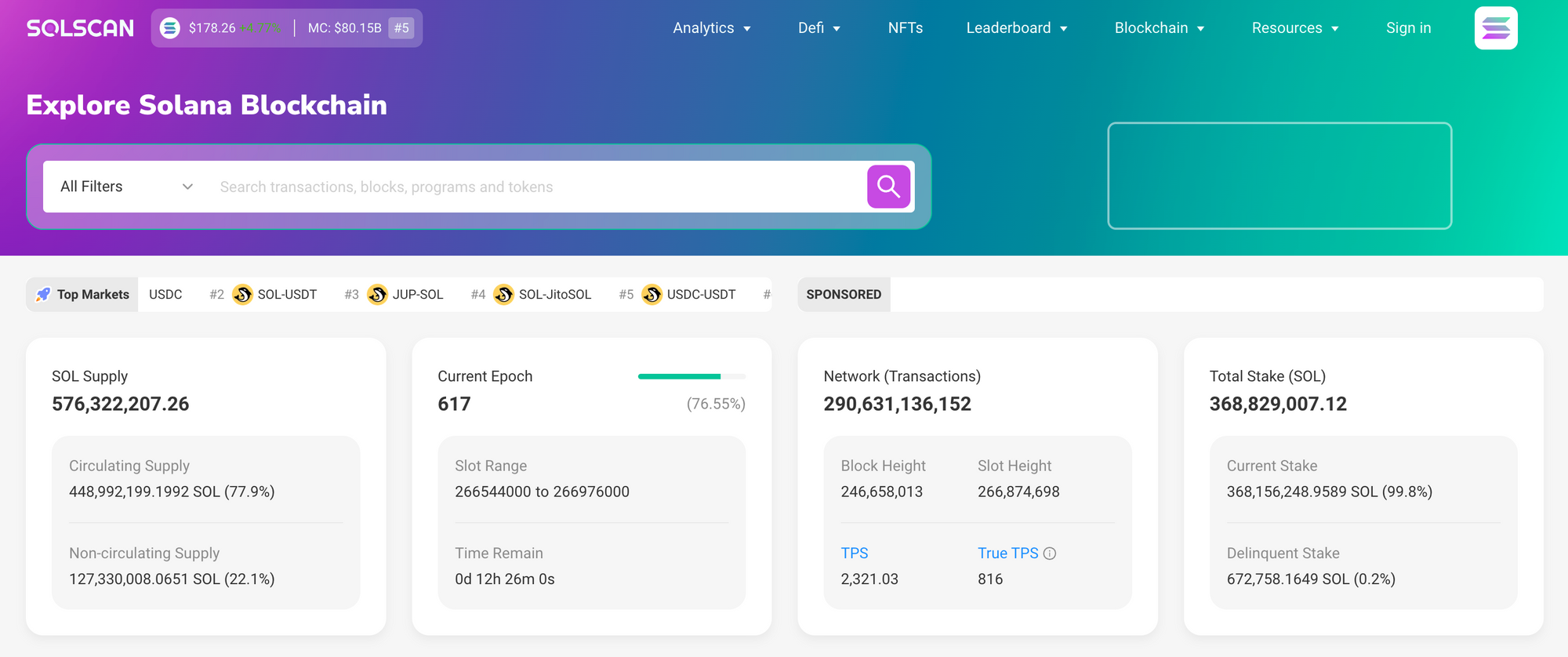
Why a good Solana explorer changes how you track NFTs, on-chain flows, and what really happened

Whoa! I landed on Solana analytics by accident, and my curiosity spiked. There was a tangle of transactions I couldn’t reconcile at first. Initially I thought the problem was a wallet mismatch, but then realized the on-chain events told a different, richer story that required a purpose-built explorer to untangle. My instinct said: follow the data, not the rumor, and then verify timestamps, block signatures, and account histories to be sure you’re not chasing folklore.

Seriously? Solana moves fast; blocks confirm in milliseconds, so patterns emerge quick, but that speed also means noise accumulates and bad actors can iterate strategies in minutes, not days. I used an explorer to trace token flows and NFT provenance step by step. On one hand the network’s speed felt liberating for creators, though actually the same speed amplifies obfuscation when wallets interact through multiple programs across layered instructions that aren’t always easy to follow. Something felt off about some mints; fees didn’t match the narrative.

Whoa! I leaned on visual timelines, and those timelines illuminated odd spikes that only made sense when overlaid with token mint timestamps and program instruction sequences. NFT trackers showed transfers to dust accounts that later aggregated into a single bidding wallet. Initially I thought it was wash trading, but then I dug deeper and found a mix of legitimate collectors, warmed test accounts, and scripted bots that seeded liquidity as if rehearsing a play, which made attribution messy. I’ll be honest, the opacity still frustrates me a lot.

A timeline visualization of Solana transactions

How I use explorers for Solana forensics

Hmm… So I started using an solscan explorer that could parse inner instructions and token metadata, allowing me to attribute changes to specific program calls rather than guessing from balance deltas. Actually, wait—let me rephrase that: what I needed was not just parsing, but a UI that surfaces who interacted with a mint, when the ownership changed, and why a swap routed through multiple programs before settlement. That clarity sped up investigations and prevented false positives. Check this out—visual filters let me compare collections quickly.

Whoa! I cross-referenced bidding histories with wallet reputations and found patterns. The NFT tracker flagged repeated metadata swaps before listings went live. On one hand this looks like careful market making; though actually, forensics showed coordinated drops timed with influencer posts, which raises very very important questions about disclosure and front-running on secondary markets. My instinct said follow volume, velocity, and the top transactors.

Really? You can export CSVs, build dashboards, and share snapshots with teams. Initially I thought screenshots would suffice for audits, but then realized an auditable CSV with timestamps and block signatures is far superior when compliance or legal chain-of-custody questions arise. I’m biased, but reusable queries saved me multiple hours weekly. Also, alerts notify you when large holders move or collections suddenly spike.

Wow! There are quirks though, like token decimals and wrapped accounts that trip novices up. On the technical side, a challenge is that Solana’s programs can nest cross-program invocations, so a simple transfer might actually represent a series of state changes across several contracts, which complicates naive heuristics. That complexity means heuristics need testing against labeled cases. I’ve rebuilt queries more than once because of edge behaviors.

Whoa! Privacy isn’t solved either; wallets can be pseudonymous and still coordinate off-chain. On one hand analytics expose many relationships, though actually attribution often needs corroboration like on-chain signatures combined with social proofs or KYCed marketplaces, which steps outside the explorer’s domain. I sometimes reached out to creators directly to confirm provenance. Oh, and by the way—marketplaces differ in how they record fees and royalties.

Hmm… For power users, program-level traces are indispensable when investigating rug pulls. Initially I thought most scams were simple drains, but later I learned that sophisticated attackers orchestrate multi-step exits using escrow-like programs and temporary authority delegations to obfuscate provenance and timing. A good explorer surfaces instruction logs and token balances before and after each step. Those transaction snapshots are invaluable during postmortem investigations and reporting.

Seriously? If you’re tracking NFTs, watch collection mints, rarity shifts, and cross-listings closely. On one hand rarity algorithms give quick signals though actually combining rarity with liquidity metrics, holder concentration, and history of transfers paints a more defensible valuation model that respects market behavior instead of just headline rarity scores. Use saved views to compare floor prices over custom epochs and export evidence for stakeholders. I’m not 100% sure about every analytic claim out there, but the right explorer — the one that balances speed, readable traces, and exportable proofs — changes how you make decisions on-chain and helps teams move quicker with more confidence, even when the ecosystem does somethin’ weird.

FAQ

What’s the quickest way to start tracing an NFT on Solana?

Start with the mint transaction: check the minter address, associated metadata, and immediate transfers. Then layer in timeline filters to watch for quick flips, and export a CSV for legal or compliance needs. I’m biased toward program-level traces, but those snapshots cut investigation time dramatically.

READ MORE
Uncategorized
September 21, 2025 By admin

Why DeFi Integration, Cross-Chain Swaps, and Private-Key Control Are the Next Big Thing for Wallets

Okay — hear me out. DeFi used to feel like a garage project for coders. Now it’s creeping into everyday wallets. Seriously, the shift from custody-heavy apps to user-controlled, feature-rich wallets is happening fast. My instinct said this was inevitable, but there are trade-offs that folks gloss over. I’m biased toward self-custody, but I’m also pragmatic: convenience matters, too.

People want one app that does three things well: access to DeFi (lending, staking, yield farming), smooth cross-chain swaps, and true control over private keys. No middlemen. No surprises. No hidden routes where your funds might be custodied without you knowing. That combination is powerful. It also introduces UX, security, and liquidity challenges that deserve attention.

Short version: if a wallet nails those features, it changes user behavior. They stop treating crypto like a set of separate silos — Bitcoin here, Ethereum there, tokens somewhere else — and start managing capital across chains as if it’s a unified portfolio. But getting there takes solid design and some tradecraft, because DeFi isn’t just features; it’s about composability, permissions, and trust boundaries.

A conceptual diagram showing DeFi apps connected to a multi-chain wallet

Why DeFi integration in wallets matters

DeFi integration means wallets act as more than vaults. They become platforms. Wallets that integrate DEX access, lending markets, staking interfaces, and yield aggregators give users the ability to act without jumping between apps. That reduces friction, lowers cognitive load, and — crucially — keeps the user in control of approvals and signing. But integration must be done with care.

Here’s the thing. Many “integrated” wallets simply link out to Web3 dapps in an embedded browser. That’s fine, but it often hides important metadata about transactions. You need transaction pre-checks, clear gas estimates, and permission granularities. Users should be able to see what a smart contract call will do before they sign. Somethin’ as small as a misleading approval screen can cost hundreds or thousands.

On the upside, well-executed integration can democratize advanced DeFi strategies. Imagine a user who wants to swap an LP token on chain A for a stablecoin on chain B, then stake the stablecoin in a yield vault — all from a single wallet flow. That isn’t hypothetical anymore. It’s being built. And users who value privacy and self-custody will choose wallets that offer these multi-step flows securely.

Cross-chain swaps: technical approaches and pitfalls

Cross-chain swaps are sexy. They also vary widely in trust and complexity. There are three broad approaches: custodial bridges (fast, risky), federated or multi-sig relays (moderate trust), and trustless bridges using smart contracts and on-chain verification (ideally minimal trust but complex and sometimes slow).

Custodial solutions are simple to integrate and cheap to run for operators, but they centralize risk. Federated models split trust, but they’re only as strong as the parties involved. Fully trustless protocols are elegant — atomic swaps, cryptographic proofs, light clients — yet they can be slow or expensive and require deep engineering.

Cross-chain liquidity is another headache. Good UX depends on near-instant swaps at reasonable cost. That usually means routing through an intermediate liquidity layer or using liquidity pools across chains. Routing logic becomes a UX problem: who pays fees, which path is cheapest, and how long will it take? Wallets that expose swap routing choices to users risk confusing them; wallets that hide them risk overcharging or exposing users to slippage they didn’t accept.

In practice, the best wallets combine smart routing, clear fee breakdowns, and fallbacks. They also let power users tweak defaults. No single approach fits all users. On one hand, you want simplicity. On the other, advanced users demand transparency and control. Balancing that is the product challenge.

Private keys: control, backup, and recovery

Control of private keys is the core promise of self-custody. If you don’t control the keys, it’s not truly your crypto. That said, the user experience for key management is rough for many people. Seed phrases are fragile. Hardware wallets are great but can be intimidating. Social recovery and multi-sig bring options, but they add complexity.

What I find compelling is hybrid UX: give users the ownership model they want while offering practical safety nets. For instance, enabling optional multi-device keys, social recovery guardians, or encrypted cloud backups that require a local piece to reconstruct. Each scheme comes with trade-offs in threat models and user trust. Choose accordingly.

Also — and this bugs me — many wallets promise “we never see your keys” while routing transactions through services they operate. It’s not always malicious, sometimes it’s pragmatic caching, but users should be told plainly what’s happening. Transparency builds trust, and trust is currency in crypto.

Putting it together: what good wallet design looks like

Good wallets treat DeFi as composable building blocks while protecting the user’s sovereignty. Practically, that means:

  • Clear permission UX for contract approvals and re-approvals.
  • Integrated, transparent swap routing with fee and slippage breakdowns.
  • Optional advanced settings for power users (custom gas, route selection).
  • Robust key management options: seed phrases, hardware integrations, social/multisig recovery.
  • Privacy features that limit telemetry and avoid unnecessary custody.

Atomic-style wallets and similar designs attempt to hit this balance. If you want a wallet that merges cross-chain swapping, integrated DeFi access, and control over private keys, check tools like atomic and compare how they handle approvals, routing, and recovery. I’m not endorsing blindly, but it’s a useful reference point when evaluating trade-offs.

One more practical tip: always test flows with small amounts first. Even the best wallets evolve. Swaps and smart contracts change. Start small, confirm the UX matches your threat model, then scale up.

FAQ

Is integrated DeFi in wallets safe?

Mostly yes, if the wallet gives you visibility and control over approvals. Safety depends on the wallet’s architecture, how it handles RPC calls, and whether it reroutes or proxies transactions. Look for explicit permission dialogs and the ability to revoke approvals.

How do cross-chain swaps avoid double-spend or fraud?

Trustless approaches use cryptographic proofs and on-chain settlement, while custodial systems rely on operator integrity. Multi-sig and federated relays reduce single-point-of-failure risk. Evaluate the trust assumptions before moving large amounts.

What if I lose my private key?

Without recovery mechanisms, lost private keys mean lost funds. Use wallets that offer secure backup options—hardware wallets, encrypted backups, or social/multisig recovery—and understand the threat model for each option. Practice recovery steps before relying on them for large balances.

READ MORE
Uncategorized
September 20, 2025 By admin

How Price Alerts, Trading Volume, and Market Cap Signals Can Keep You Ahead (or Off a Cliff)

Okay, so check this out—I’ve been watching DeFi price action for years and the noise never stops. Here’s the thing. You can get whipsawed in minutes. My instinct said somethin’ was off more than once. But there are patterns, and some rules that actually help separate the signal from the static.

At first glance you might think alerts are just bells and whistles. Initially I thought that too, but then realized they’re the backbone of disciplined trading. On one hand alerts can free you from screen-scraping all day, though actually they can also create panic if you don’t tune them. You need context—volume, liquidity, and market cap trends—before you react.

Here’s the thing. Volume is the loudest on-chain voice you can hear. Short bursts of crazy volume with no sustained follow-through usually mean a single wallet decided to play theatre. Conversely, steady rising volume over several intervals often coincides with true interest, especially when paired with rising market cap. Watch for divergence. If price climbs but volume shrinks, that’s a red flag.

Here’s the thing. Alerts should be tactical, not emotional. Set tiered alerts: small nudges for early awareness and stronger ones for actionable levels. For example, a 1% intraday alert keeps you informed, a 5% alert prompts a quick review, and a 10% alert requires a decision. This ladder reduces FOMO and cuts noise. Sound basic? It is—yet very very important.

Here’s the thing. Market cap whispers the narrative behind a token. A sudden spike in market cap without matching volume usually means minted tokens or a market cap calculation quirk. Hmm… that used to trip me up. I once chased a 300% pump that looked legit until I checked circulating supply changes. Ouch.

Candlestick chart with volume bars and annotations showing alert thresholds

Practical setup and why one alert type alone fails

Here’s the thing. Price-only alerts are blunt instruments. Volume-only alerts miss sentiment shifts. Market cap-only alerts ignore short-term liquidity. Together they triangulate reality. Seriously? Yes—it’s that simple, but execution matters.

Here’s a reliable checklist I use. Monitor: price momentum (multi-timeframe), 24h and rolling volume, market cap changes, and liquidity (pool depth on DEXes). Cross-check large swaps and wallet movements when you see sudden spikes. If you want a single app that aggregates these layers for quick reference, consider using the dexscreener apps official which I use as a starting point for scans and alerts.

Here’s the thing. Alert thresholds should be dynamic. Use volatility measures like ATR or historical standard deviation to avoid false alarms during calm or hyperactive markets. If ATR is low, drop thresholds; if ATR is high, widen them. This is a small tweak that keeps your inbox sane and your reactions rational.

Here’s the thing. Liquidity matters more than hype. A 20% move in a token with $5k pool depth can be front-run and reversed in a heartbeat. I learned that the hard way in 2021. The lesson? Pair alerts with liquidity snapshots so you don’t execute into thin markets. Also, set slippage limits and be ready to cancel trades.

Here’s the thing. Use layered triggers to reduce noise. Combine a price threshold with a volume multiplier and a market cap change window. For instance: alert me only if price moves 4% within 15 minutes AND volume is 3x the 1-hour average AND market cap rises by 2% in that window. That triple-filter cuts the fluff and surfaces meaningful moves.

Here’s the thing. Timeframes change the story. A 1-minute pump could be a bot. A 1-day trend is often institutional. Look across multiple frames before acting. On one hand short frames catch breakouts early, though actually they generate more false positives. Balance is key.

Here’s the thing. Alerts are also risk tools. Use downside alerts tied to liquidity and market cap contractions. If market cap erodes quickly while liquidity vanishes, that’s typically a rug or a de-listing pressure. Set safety exits for those scenarios and test them—paper trade the logic until it feels natural. I’m biased, but testing rules saved me from somethin’ ugly.

Here’s the thing. Bots and whales leave footprints. Watch large incoming transfers to exchange addresses and big swaps on DEXes. Volume spikes driven by a few wallets should be treated skeptically. My gut sometimes screams “whale” before my metrics confirm it. Trust the metrics, but don’t ignore the gut.

Common pitfalls and how to avoid them

Here’s the thing. Over-alerting is real. Too many nudges makes you ignore all of them. Consolidate alerts into actionable categories and silence the rest. Use aggregates and summaries during low-impact hours so you don’t burn out.

Here’s the thing. Misreading market cap is common. Don’t confuse token price rises with true market cap growth when supply is dynamic. Always check circulating supply changes and tokenomics updates. Sometimes teams mint or unlock tokens without a big announcement, and that kills the thesis.

Here’s the thing. Relying on a single data provider is risky. Cross-verify on-chain data, DEX pools, and market aggregators. If numbers disagree, dig in—there’s usually a reason, like delayed indexing, chain forks, or flawed token contracts.

Frequently asked questions

How many alerts are too many?

Keep it lean. Start with 3-5 high-signal tiers: awareness, review, action, and panic. If you need more, combine triggers instead of adding standalone alerts. This reduces decision fatigue and false reactions.

What volumes indicate genuine interest?

Look for volume that exceeds the 24h moving average by at least 2-3x and persists across multiple intervals. Also check if liquidity pools absorb the volume without slippage sky-rocketing. If both conditions hold, interest is probably genuine.

Can alerts replace active monitoring?

No. They complement active monitoring. Alerts free you to focus on analysis rather than constant watching, but they shouldn’t replace manual checks for on-chain transfers, governance news, or exchange listings.

READ MORE

Recent Posts

  • Guide pour se connecter à Instant Casino sur mobile
  • Guide des paris sportifs sur Instant Casino sports et cotes
  • Advantages and Disadvantages of Remember Me Feature at Fair Go Casino Login
  • Beliebteste Spielautomaten Spiele im Pistolo Casino Vergleich
  • Starzino Casino Blackjack Strategieën voor Beginners en Gevorderden

Recent Comments

  1. Farell Colins on Set of Big Parcels
  2. David Parker on Set of Big Parcels
  3. Farell Colins on Premium Small 1-2kg
  4. David Parker on Premium Small 1-2kg
  5. Farell Colins on Premium Big Parcels

Archives

  • February 2026
  • January 2026
  • December 2025
  • November 2025
  • October 2025
  • September 2025
  • August 2025
  • July 2025
  • June 2025
  • May 2025
  • April 2025
  • March 2025
  • February 2025
  • January 2025
  • November 2023
  • September 2023
  • August 2023
  • June 2023
  • May 2023
  • April 2023
  • December 2022
  • June 2021

Categories

  • PACKAGE
  • Uncategorized
Categories
  • PACKAGE1
  • Uncategorized337
Popular Tags
delivery logistics trends
Gallery

Copyright © 2021 Transmax by WebGeniusLab. All Rights Reserved